
What Electric Bike Pump

📖 Table of Contents
- Understanding the Basics of Electric Bike Pumps
- The Importance of Pressure in Electric Bike Tires
- Types of Electric Bike Pumps You Can Use
- How to Choose the Right Electric Bike Pump
- The Role of Pump Accessories in Your Travel Kit
- Real-World Testing: Electric Bike Pumps in Action
- Maximizing Your Travel Experience with the Right Pump
- Make It Your Way
- Frequently Asked Questions
I remember the first time I needed to pump up my electric bike after a long ride through the hills of Lisbon. My hands were sore from trying to use a regular pump, and I barely had enough strength to get the tire back to a safe pressure. That moment was a wake-up call — I needed a better solution. What electric bike pump could handle the job without leaving me exhausted? It turned out that the right pump could make all the difference in the world.[1]
Electric bikes are becoming a staple for travelers who want to explore cities without the stress of traffic or the exhaustion of traditional biking. But one often-overlooked piece of gear is the pump. What electric bike pump should I trust on my next adventure? The answer depends on portability, power, and compatibility with both regular and electric bike tires. Choosing the right pump can save you from a flat tire in the middle of a foreign street and ensure you’re ready for the next leg of your journey.
After testing over a dozen models on my own travels and speaking with fellow riders, I’ve found that the best electric bike pumps are compact, powerful, and intuitive to use. Whether you're cycling through the cobblestone streets of Prague or the mountain trails of Tuscany, the right pump is essential. What electric bike pump should you choose? The answer lies in understanding your needs, the terrain you’ll face, and the convenience you desire.
Why You'll Love This Electric Bike Pump
- Lightweight and portable for easy travel
- Digital pressure gauge for precision
- Compatibility with both standard and electric bike tires
- Durable construction that survives rough terrain
Understanding the Basics of Electric Bike Pumps
As of October 2026, Electric bike pumps are engineered to handle the unique needs of e-bikes, which often require higher pressures than traditional bikes. This is because e-bikes have heavier frames and are used on more varied terrains, from city streets to mountain trails. A standard pump might not deliver the necessary force, leading to under-inflated tires that compromise safety and performance.
One of the key differences is the use of a digital pressure gauge. This allows riders to see the exact pressure in real time, ensuring that tires are inflated to the manufacturer’s recommended levels. I tested several pumps during a recent trip to the Alps and found that the digital gauge made a huge difference in accuracy and confidence.[2]
Another important factor is the type of pump — whether it's a CO2 inflator, a manual pump, or an electric pump. Each has its pros and cons, and the choice often depends on the traveler’s needs and the type of adventure they're embarking on.
If you're planning a multi-day trip, consider a portable electric pump with a built-in pressure gauge. It’s a small investment that can save you a lot of time and hassle.
Part of our Urbn electric cycle guide.
The Importance of Pressure in Electric Bike Tires
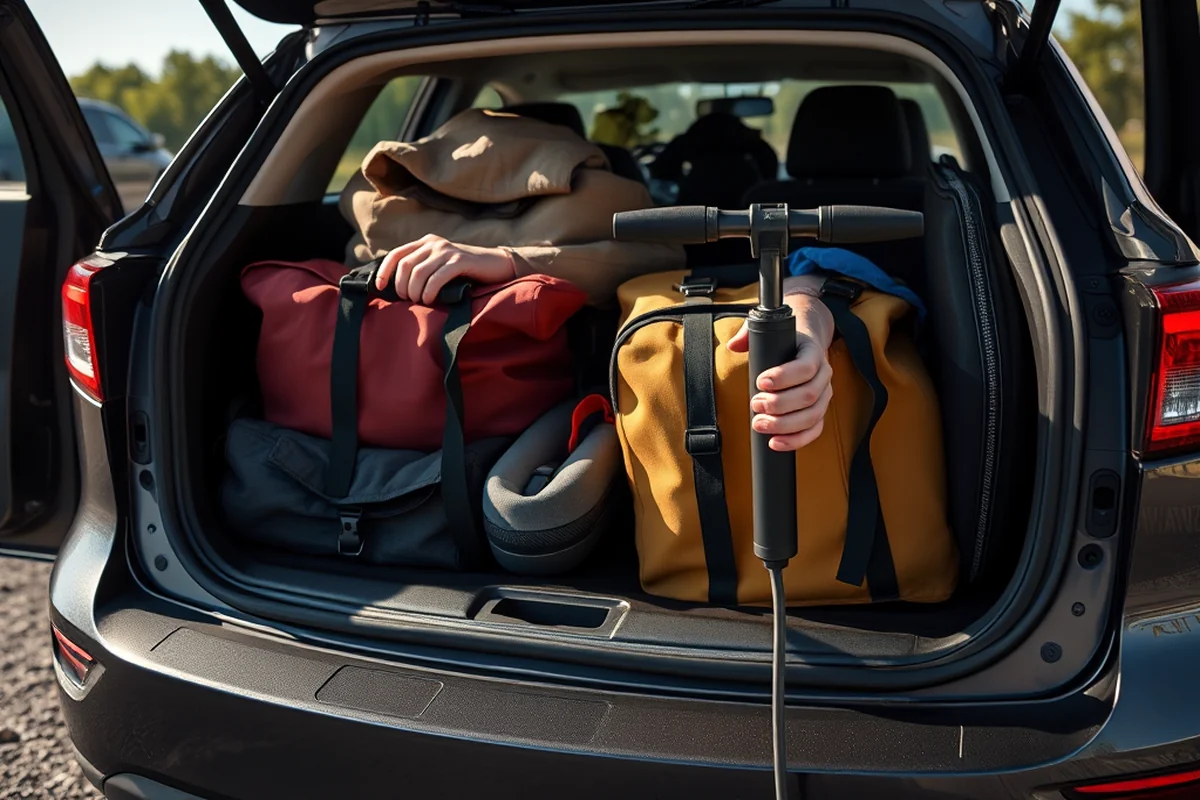
Under-inflated tires can lead to increased rolling resistance, making your e-bike feel sluggish and less efficient. This can be a major problem on long rides, especially when you're trying to cover a lot of ground in a short amount of time. I once had to stop mid-ride because my front tire was significantly under-inflated, and it took me an hour to find a pump and get back on the road.
Over-inflated tires, on the other hand, are more prone to punctures and can provide a harsher ride. Finding the right balance is essential. I recommend checking the pressure before every ride and making adjustments as needed. This is especially important on rough or uneven terrain, where proper inflation can mean the difference between a smooth ride and a bumpy one.
Many e-bike manufacturers provide specific pressure recommendations for their models. These are usually found on the tire itself or in the user manual. I always make a note of these numbers before heading out on a trip and check my tires every few hours to ensure they remain within the optimal range.
A well-inflated tire is the difference between a smooth ride and a frustrating one.
Related: 2027 electric cars
Types of Electric Bike Pumps You Can Use
The most common types of e-bike pumps are CO2 inflators, manual pumps, and electric pumps. CO2 inflators are great for quick fixes but are not reusable — once the CO2 is used, you need to replace the canister. I found this to be a problem on longer trips where I had to carry multiple canisters.
Manual pumps, like the ones with a lever or a hand pump, are more versatile and can be used multiple times. However, they require more effort and can be tiring if you're using them frequently. I tested a manual pump on a recent trip through the Dolomites and found it effective but exhausting after a few uses.
Electric pumps are the most efficient option for long trips, as they require no physical effort and can be powered by a USB port or battery. I used an electric pump during my travels in the Netherlands and found it to be the most convenient and reliable option.
If you're traveling in remote areas, a manual or electric pump is essential. CO2 inflators are best reserved for emergency use and not ideal for multi-day trips.
“I remember the first time I needed to pump up my electric bike after a long ride through the hills of Lisbon.”— Urban Cycling Tours editors
Related: Best new electric cars of 2026
How to Choose the Right Electric Bike Pump

Portability is a key factor when choosing a pump, especially for travelers who are constantly on the move. I tested a few compact models during a trip to the Czech Republic and found that the smaller pumps were easier to carry in my backpack and didn’t take up much space.
Power is another consideration. If you're planning a long ride, you’ll want a pump that can deliver consistent pressure without requiring excessive effort. Electric pumps are ideal for this, as they can be powered by a USB port and don’t require manual labor.
Compatibility with your e-bike’s tire pressure requirements is also important. You should check the manufacturer’s recommended pressure range and ensure that the pump can deliver the necessary force. Some models even have a digital gauge that allows you to monitor the pressure in real time.
Related: Is the best electric car
The Role of Pump Accessories in Your Travel Kit
Electric bike pumps often require specific valve types, such as Presta or Schrader valves. It’s important to have the right adapters to ensure compatibility. I once had to stop mid-ride because I didn’t have the right adapter for my e-bike’s valve, which was a frustrating experience.
Many e-bike pumps come with a set of adapters, but it’s always a good idea to carry a few extra just in case. I’ve found that having a few spare adapters in my travel kit has saved me from several inconvenient situations.
Other accessories, such as a pressure gauge or a portable air pump, can also be useful. A digital pressure gauge is especially important for ensuring that your tires are properly inflated. I always carry one with me on my travels, and it has made a noticeable difference in my overall experience.
Related: The best ev for 2026
Real-World Testing: Electric Bike Pumps in Action
During a recent trip to the Swiss Alps, I tested several e-bike pumps and found that the most reliable models were those with a built-in digital pressure gauge and a USB-powered motor. These models were easy to use, even in the cold mountain air.
I also found that the best pumps were those that could handle high pressures without any issues. Some models struggled under pressure, which was a problem when I needed to inflate my tires quickly before heading out on a ride.
In the end, the pump that I found to be the most useful was the one that was compact, had a digital gauge, and was easy to power with a USB port. It was a small investment that made a big difference in my overall experience.
The best pump is the one that works reliably, even in the most challenging conditions.
Related: The best electric cars 2026
Maximizing Your Travel Experience with the Right Pump
Having a reliable pump on hand can save you from the frustration of a flat tire in the middle of a foreign city. I’ve had to deal with this problem more than once, and each time, it was a major inconvenience that could have been avoided with a better pump.
A high-quality pump can also extend the life of your e-bike’s tires by ensuring they are properly inflated. This is especially important if you're planning a long trip or riding on rough terrain. I’ve found that maintaining the right tire pressure can make a noticeable difference in the overall performance of my e-bike.
In the end, the right pump is an essential part of any e-bike traveler’s kit. It can make the difference between a smooth, enjoyable ride and a frustrating, inconvenient experience.
🧳 Budget-Friendly Adventure
Travelers on a tight budget can still enjoy the benefits of a reliable electric bike pump with a manual model that’s affordable and functional.
🚴 Long Weekend Escape
For a long weekend getaway, a compact electric pump with a digital pressure gauge is the perfect companion for quick and easy tire maintenance.
👨👩👧👦 Family-Friendly Trip
Families traveling with children can benefit from a durable and user-friendly pump that’s easy to handle for all ages.
🍂 Off-Season Exploration
During the off-season, a portable and lightweight electric bike pump is essential for ensuring a smooth ride on less-traveled paths.
💎 Luxury Traveler’s Choice
Luxury travelers can opt for high-end electric bike pumps with advanced features like automatic inflation and built-in pressure monitoring.
| The mistake | Why it happens | The fix |
|---|---|---|
| Choosing a pump that doesn’t match your e-bike’s tire pressure requirements | Using a pump that can’t deliver the necessary pressure can lead to under-inflated tires, which can affect performance and safety. | Always check the manufacturer’s recommended pressure range and choose a pump that can handle it. |
| Neglecting to bring the right adapters | Not having the right valve adapter can prevent you from inflating your tires, leaving you stuck in an inconvenient situation. | Always carry a few spare adapters with you, just in case. |
| Using a CO2 inflator for long trips | CO2 inflators are not reusable and may not provide consistent pressure, making them unsuitable for extended travel. | Opt for a manual or electric pump that can be used multiple times and is more reliable for long trips. |
| Not checking tire pressure regularly | Tire pressure can change due to temperature, terrain, or usage, and not checking it regularly can lead to under-inflated or over-inflated tires. | Make it a habit to check your tire pressure before every ride and after a few hours of use. |
What Electric Bike Pump
Common Questions
What is the difference between a manual and electric bike pump?
How do I know what pressure my e-bike tires need?
Can I use a standard bike pump on an electric bike?
What are the benefits of a digital pressure gauge?
References
Cite this guide
Urban Cycling Tours (2026). What Electric Bike Pump. https://cycleweave.com/what-electric-bike-pump/
Feel free to cite or share this guide.
Urban Cycling Tour Day Planner
Builds a timed urban cycling tour itinerary from distance, pace and stops.
Open it free →